Metro Manila Cleaning Ops 2026: Where Automation Actually Earns Its Keep
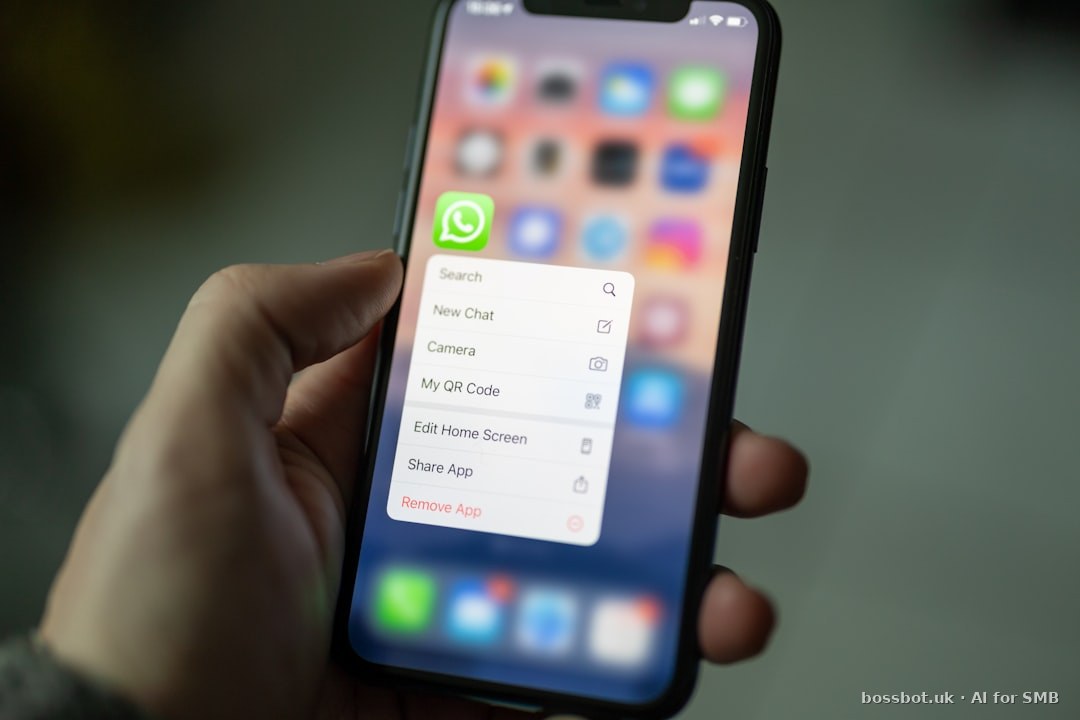
Metro Manila cleaning runs on Messenger, not WhatsApp. Where automation actually moves the ledger — and where it does not.
- The channel reality — Messenger, then Viber, then WhatsApp
- Where wages hit the ledger — labour is the fixed reality
- The unbilled coordination hour — where operator time actually goes
- The compliance stack most Metro Manila cleaning ops under-model
- Payment rails — GCash and Maya on Messenger
- Where automation earns its keep — and where it does not
- The defensible 2026 Metro Manila cleaning-ops messaging stack
The channel reality — Messenger, then Viber, then WhatsApp
Domestic Filipino customers reach small service businesses through the channels they already use in daily life, and for the majority of the PH market that is Facebook Messenger first (consistently at the top of DataReportal's Digital Philippines annual report, historically above 80% of internet users), Viber second (strong in urban professional segments), and WhatsApp a smaller share. For a Metro Manila cleaning ops serving the Makati, Bonifacio Global City, Ortigas, or Quezon City residential and small-office segment, this means the messaging automation surface should mirror how the customer base actually behaves. Meta's Business Messaging platform on the Messenger side (accessible directly via Meta Business Suite for lower volume, or via a BSP with Messenger support at scale) covers the same functional workflow as WhatsApp — shared inbox, auto-reply, template-based sends, payment-link dispatch. A cleaning ops that hires a WhatsApp-only vendor because a comparison article told them to is optimising the wrong channel. The exceptions where WhatsApp genuinely fits: cleaning services catering to expat, executive, or corporate-relocation client segments where WhatsApp is the default professional-communication channel; cross-border property-management services where owner and cleaner sit in different countries. For most domestic Metro Manila cleaning ops, the channel mix is Messenger-primary.
Where wages hit the ledger — labour is the fixed reality
The biggest single line on a Metro Manila cleaning-ops profit-and-loss is cleaner labour, and it is fixed with respect to the messaging automation choice. Cleaner-employee cost is set by the daily minimum wage set by the National Wages and Productivity Commission (NWPC) for the National Capital Region, revised periodically via wage orders that operators should verify against the NWPC portal rather than quote from memory. Employer overhead sits on top: Social Security System (SSS) contributions (employer and employee shares, tiered by monthly salary bracket), PhilHealth premiums (which shifted to a fully-integrated Social Health Insurance basis in prior years and the current contribution rates are on the PhilHealth portal), Pag-IBIG Fund contributions, and Bureau of Internal Revenue (BIR) monthly PAYE-equivalent withholding for staff earning above the tax-relief threshold. The Department of Labour and Employment (DOLE) regulates the employment relationship — wage payment discipline, mandatory benefits, rest-day rules, and holiday pay premiums — and DOLE inspection is a real risk for cleaning operations that misclassify workers as contractors when they meet the four-fold test for employee status. Automation does not touch this line. What it does touch: the operator's ability to fill a cleaner's day at high utilisation. A cleaner earning the same fully-loaded rate produces more revenue when the schedule is dense than when there are gaps, and messaging automation genuinely reduces the gap density by shortening enquiry-to-booking time.
The unbilled coordination hour — where operator time actually goes
Owner-operators of Metro Manila cleaning shops describe a specific and consistent pain: the two-to-four hours a day spent coordinating jobs that are already booked. Rescheduling requests, cleaner-to-client handoff issues, missing-key coordination, apartment-access permissions from building administration, invoicing follow-up, complaint triage. This is time not billable to any specific job — it is the operator's own unbilled hour that determines whether the business is a job for the owner or a business that pays the owner. Messaging automation moves this line more than any other. Reschedule requests captured through a structured message (client selects a new slot from a template rather than a free-text back-and-forth), automated 24-hour reminders that reduce the day-of coordination scramble, automated post-service invoicing with GCash or Maya payment-link dispatch, and automated review-request follow-up that closes the feedback loop without a manual send. For an operator whose monthly gross revenue is meaningful but whose owner-effective-hourly-rate is depressed by coordination overhead, automation that returns two hours a day to the operator is measurable value even when it does not touch any of the direct cost lines. This is the line most operators do not model when evaluating a subscription.
The compliance stack most Metro Manila cleaning ops under-model
Three regulatory rails apply to a Metro Manila cleaning ops and are worth costing explicitly. Data Privacy Act 2012 (Republic Act 10173) administered by the National Privacy Commission (NPC): customer names, addresses, contact numbers, and payment records are personal data; the operator is a personal-information controller; the messaging platform is a personal-information processor with a corresponding Data Processing Agreement obligation. Sensitive personal information (Section 13) becomes relevant if the ops handles anything that touches health (e.g., cleaning for households with immune-compromised residents where medical context is disclosed). BIR business registration and OR issuance: sole-proprietor 8% flat tax election under the PHP 3 million VAT threshold, graduated schedule with 12% VAT above. Official Receipts required for every service transaction — paper booklets from BIR-accredited printers for now, transitioning to the eReceipt Electronic Invoicing System in phased mandatory categories with expansion planned. The messaging automation is not the invoicing rail; it is the delivery channel. Nationwide business-name and local-permit registration: DTI for sole proprietors, SEC for corporations, plus the local city or municipal business permit renewed annually via the LGU's online portal (Quezon City's is one of the more mature; Makati and BGC have their own). Skipping any of the three creates specific exposures — DPA breach penalties, BIR non-compliance, LGU permit lapses — that are unrelated to the messaging platform choice but that a well-run ops should stack against.
Payment rails — GCash and Maya on Messenger
The payment step in a Metro Manila cleaning ops runs almost entirely on GCash and Maya (formerly PayMaya), the two dominant BSP-supervised e-money issuers in the market. Both support scan-to-pay via QR code and link-based payment dispatched inside a messaging thread — Messenger, Viber, or WhatsApp. For higher-value corporate cleaning contracts (offices, retail spaces), InstaPay and PESONet run interbank real-time transfers under the National Retail Payment System framework administered by Bangko Sentral ng Pilipinas. Cash remains present at the lower-value residential end of the market but has declined as GCash penetration deepened post-2020. Automation on the payment step: the ops sends the GCash or Maya link (or QR) inside the message thread after the service is booked or completed, the customer authorises payment on the e-money issuer's flow, the confirmation callback into the accounting system triggers the OR issuance step. What automation does NOT do: hold funds. GCash and Maya are BSP-licensed e-money issuers; the ops does not hold customer funds through the messaging channel.
Where automation earns its keep — and where it does not
Set against the ledger and the channel reality, the automation earns its keep on two specific lines. Enquiry-to-booking conversion — a first-response template dispatched within seconds of an inbound message on Messenger (or Viber, or WhatsApp) captures the enquiry in the customer's active shopping window, before they message a competing service. Recurring-client rebooking — a scheduled reminder the day before each recurring visit ('Your Saturday 10am clean is confirmed, reply STOP to reschedule') keeps the appointment on the client's calendar and reduces silent cancellation. These two lines are where an operator will see measurable movement in monthly numbers after adopting the automation. What automation does NOT move: cleaner labour (fixed by NWPC minimum + SSS/PhilHealth/Pag-IBIG overhead + PAYE), supplies (detergents, disinfectants, microfibres, mop heads), transport (cleaner commute cost and job-to-job travel time in Metro Manila traffic), regulatory overhead (DOLE, BIR, DPA, LGU permits). Any pitch that claims automation reduces those lines is describing something the technology does not do. The honest ROI calculation attributes automation savings to the two lines it moves — enquiry conversion and recurring rebooking — and models the subscription cost against those specific gains.
The defensible 2026 Metro Manila cleaning-ops messaging stack
For a Metro Manila cleaning ops in 2026 with steady residential and small-office volume, a defensible stack starts with the channel reality. Discovery: Google Business Profile with reviews requested from every completed job, plus a Facebook Page as the primary social-discovery surface for Messenger-first customers. Messaging: Meta Business Suite for Messenger at low volume, or a BSP with Messenger support (plus WhatsApp for the expat/executive segment where it fits) at scale. Booking: a scheduling tool that supports the operation's model — Fresha and Booksy for salon-adjacent operations, simpler tools for cleaning-specific scheduling, or a custom Google Sheets + calendar workflow for smaller ops. Payment: GCash and Maya link dispatch from inside the messaging thread; InstaPay/PESONet for corporate contracts. Compliance: DTI (sole prop) or SEC (corp) business registration, BIR TIN and OR issuance workflow, LGU business permit for the operating location, DPA-aware customer contact handling, DOLE-compliant employment structure with SSS/PhilHealth/Pag-IBIG registration for cleaner-employees. This stack does not require a single 'do-everything' platform. It requires each layer to work correctly on its own and the handoffs between layers to be documented — which is different work from picking the highest-scoring option in a vendor comparison chart.
Sources
Data + numbers referenced in this article are sourced from these public documents:
Frequently Asked Questions
BossBot for Cleaning Services
Product page with honest feature list, "not for you if" filter, and live demo for this vertical.
See /for/cleaning-service →The channel reality, then the ledger, then the vendor.
BossBot supports the WhatsApp Business Platform for the segments where WhatsApp fits, and integrates with the Messenger and Viber surfaces the rest of the domestic-PH customer base actually uses.
See BossBot for Metro Manila cleaning opsNot ready to sign up yet? Try the free demo →