Lagos Restaurants: The Silent Cost of a Buzzing WhatsApp Screen
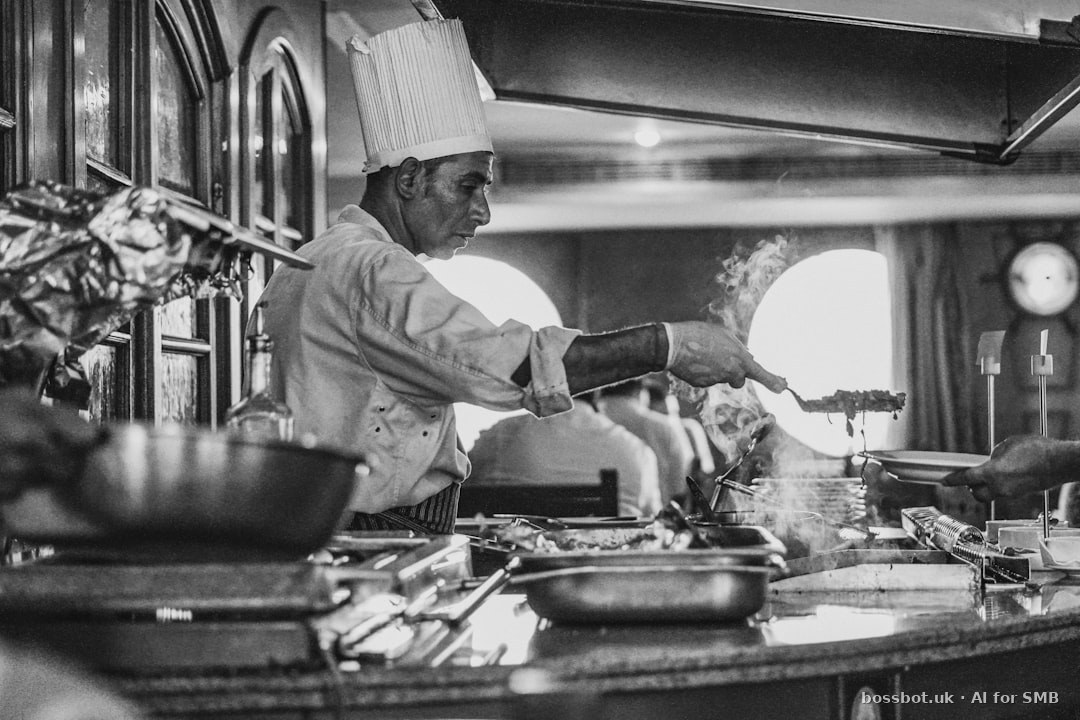
A Yaba restaurant, full house, unread WhatsApp threads stacked up, Chowdeck tickets queuing. The math on missed enquiries most Lagos owners never actually run.
- The scenario: a 40-seat Yaba restaurant that already runs on WhatsApp
- The audit: three specific leaks a Lagos F&B operator can measure this week
- The 8-week implementation sequence: what to set up in what order
- The math after: recoverable revenue and what stays leaked
- Five extractable lessons for any Lagos F&B operator
- The Chowdeck / Bolt Food / Glovo Landscape: Commission Math and the Off-Platform Migration Line
- Owambe and Detty December: Catering Broadcast Discipline and Small-Chops Order Waves
- Nigerian Payment Rails for Restaurants: Paystack, Moniepoint, OPay, PalmPay, and Direct Transfer
- Lagos State Food Safety Regulation and What Restaurants Should Not Post on WhatsApp Status
- The Staff-Training Layer: Why Every Lagos F&B Automation Project Fails Without It
The scenario: a 40-seat Yaba restaurant that already runs on WhatsApp
This is a modelled operator — not a specific client. The inputs are grounded in public benchmarks so the arithmetic is defensible: NBS food-service data, Meltwater/We Are Social Nigeria WhatsApp adoption figures, Chowdeck + Bolt Food public commission ranges, Paystack merchant fees. Any Lagos F&B operator running similar numbers should see similar math.
Operating profile:
- 40 seats, six staff (owner + supervisor + 4 kitchen/service)
- Menu mix: jollof + fried rice + suya + assorted proteins + small chops for parties
- Average bill dine-in: ₦4,500; average delivery order: ₦3,800; average small-chops catering order: ₦45,000-₦180,000
- 200 seated covers/week + ~150 delivery orders/week via Chowdeck + ~50 direct WhatsApp orders/week
- Peak service hours: 12:00-14:00 lunch, 18:00-21:00 dinner, 21:00-01:00 late-night suya window
- Owner personal WhatsApp = business WhatsApp (the common Lagos F&B pattern that breaks first)
Where the WhatsApp traffic comes from:
Saved-number regulars message directly ('Boss, una still open?'). New customers see the number on the Chowdeck listing, on the printed slip inside a delivery bag, on Instagram bio, or from a WhatsApp Status forwarded by a friend. Corporate lunch coordinators DM asking for a group order at 11:30am. Party planners message at 22:00 asking about small-chops for the weekend. Regulars message at 15:00 booking a table for that evening.
At the volume in this profile — roughly 800 WhatsApp-touched interactions per month across ordering + booking + catering + follow-up — the owner cannot personally reply to every conversation and still cook + supervise + close the register. Something drops. What drops, and how much it costs, is what we measure next.
The audit: three specific leaks a Lagos F&B operator can measure this week
You do not need consultants to find these leaks. Two weeks of manual tracking with a phone stopwatch will do it. The three leak categories that consistently show up in Lagos F&B operations:
Leak 1 — After-hours WhatsApp orders that die by morning.
Messages arriving between 22:00 and 07:00 next day. In this scenario: ~120 messages per week hit that window (weeknights lighter, Friday-Saturday-Sunday heavier — owambe season lifts this materially). Without automation, staff see the queue in the morning, respond to what they remember, and the buyer has already messaged three other spots. Response-window research from Harvard Business Review on B2C inbound is directional here: reply within 5 minutes and you keep the buyer; reply after 60 minutes and you lose 4-5× the conversions vs a fast reply. Applied to 120 after-hours weekly messages at 30% baseline conversion when responded fast, and 8% baseline when responded next-morning: roughly 26 lost sales/week × ₦3,800 average = ~₦395,000/month left on the table just from the after-hours leak.
Leak 2 — Lunch-rush enquiries dropped between 12:00 and 14:00.
Office workers in Ikeja, VI, Lekki, Sabo pre-order lunch to skip the queue. They message 30-60 minutes before they want to eat. Staff during service cannot both cook + serve + reply to WhatsApp inside the 5-minute conversion window. In this scenario: ~80 lunch-rush enquiries per week, of which ~30% get lost or delayed past the buyer's decision window. That is 24 lost lunches/week × ₦3,200 average = ~₦307,000/month from the lunch-rush leak.
Leak 3 — Catering + owambe enquiries buried in the queue.
The most-expensive leak per incident. A 'How much for small chops for 150 guests, next Saturday?' message arrives at 22:30 on Wednesday. The owner sees it Thursday morning during breakfast prep, sends a quote at 11:00, and the party planner has already booked with a competitor who replied at 07:45. Average small-chops catering order at this profile: ₦85,000. One lost catering enquiry per week (conservative for December + Sallah season) = ~₦340,000/month from the catering leak during peak periods.
Total measurable leak (this profile): ~₦1.04M/month baseline, expanding to ₦1.8-2.2M/month during December + Sallah peak. These numbers are the starting recoverable pool. Recovery below.
How to do this audit yourself: for two weeks, log every WhatsApp order enquiry the moment it arrives + the moment you respond + whether the buyer confirmed the order. A simple spreadsheet is enough. At the end of two weeks, you will have your own version of the numbers above — likely bigger, because most operators underestimate the volume before they measure.
The 8-week implementation sequence: what to set up in what order
Trying to automate everything in week one is how automation projects die. The sequence below is the one that reliably lands — small daily wins compound, staff learn one flow at a time, and mistakes get caught before they propagate to the whole customer base.
Weeks 1-2 — WhatsApp pre-order flow + Paystack payment link.
Pick a BSP (WATI, respond.io, or AiSensy for INR-billing; regional Nigerian BSPs like Prembly for local billing). Register the restaurant WhatsApp Business API. Build one flow: new-contact triggers menu image + prices + Paystack link + delivery-area check. Existing customers get a shorter flow with today's specials. Two weeks is enough to test the flow on a fraction of traffic + fix the obvious breaks before rolling to all inbound.
Measurable target end of Week 2: 30-second automated reply to any new WhatsApp enquiry with menu + payment option.
Weeks 3-4 — Daily menu via WhatsApp Status + weekly broadcast.
At 10:00am each day, an automated post-to-Status pushes the day's menu image to every saved contact. Once a week, a broadcast to opted-in list (per NDPA consent) with weekend specials or catering slots. This is the free-marketing layer — Status has near-100% view rate among engaged contacts, costs zero per view, and drives the pre-order queue.
Measurable target end of Week 4: 200+ Status views per day + measurable lift in pre-order conversion for the promoted item.
Weeks 5-6 — Catering intake form + auto-quote acknowledgement.
When an enquiry contains keywords like 'catering', 'party', 'small chops for X people', 'owambe', 'guests' — automated flow collects: event date, guest count, menu preferences, venue, contact name + phone. Response template: 'Thank you — your catering enquiry is with our team. You'll get a full quote within 3 hours during business hours, or by 10am tomorrow if outside hours.' Enquiry is captured; owner reviews at end of service, quotes in the morning. Zero enquiries are missed even during Friday night owambe rush.
Measurable target end of Week 6: 100% of catering enquiries captured in the intake queue + owner-side quote SLA of 3 hours business, next-morning off-hours.
Weeks 7-8 — Delivery-status auto-updates + reservation deposits.
When an order is confirmed and dispatched to a runner (or dispatched via Chowdeck delivery partner), automated WhatsApp: 'Your order is out — ETA 25 minutes to [area].' Reduces 'where is my food?' interruption calls by 60-80%. For reservations, automated deposit link (Paystack ₦2,000 refundable) confirms the booking + cuts no-shows from 15-25% baseline to 8-12%.
Measurable target end of Week 8: 50%+ reduction in 'where is my food?' calls + measurable no-show reduction on Friday/Saturday reservations.
Why this order matters. Weeks 1-2 give you the fastest win (the after-hours leak closes first). Weeks 3-4 build the marketing engine. Weeks 5-6 recover the highest-margin single leak (catering). Weeks 7-8 optimise unit economics on existing volume. If you flip the order and start with reservation deposits, you get a small win with no compounding effect. If you start with pre-order flow, every downstream week adds visible revenue.
The math after: recoverable revenue and what stays leaked
Recoverable, using the profile above:
- After-hours leak: from 26 lost sales/week → 8-10 lost sales/week (with 30-second automated reply + saved payment link + morning follow-up sequence for the messages that didn't convert overnight). Recovery ~₦270,000/month.
- Lunch-rush leak: from 24 lost lunches/week → 4-6 lost lunches/week. Recovery ~₦230,000/month.
- Catering leak: from 1 lost enquiry/week → ~1 lost enquiry/quarter. Recovery ~₦300,000/month (higher during Dec + Sallah, ₦500,000+/month).
- New revenue from Status marketing (not part of original leak calc): incremental 30-50 pre-orders/month × ₦3,200 = ~₦120,000/month.
Total recoverable at scale: ₦920,000-₦1.4M/month base, ₦1.8-2.2M/month during peak season.
What stays leaked, honestly:
- Complaints that need a real human immediately. Automation should never try to handle a 'my food arrived cold' message — that goes straight to owner or supervisor. If the escalation rule is wrong and a bot replies to a complaint, you make it worse.
- Voice-note orders. Common in Lagos WhatsApp culture. Standard practice: automated acknowledgement ('We received your voice note — team will confirm your order within 5 minutes') + human handoff. Voice-to-text works for English but is unreliable for Pidgin + Yoruba mixed voice notes.
- One-off custom requests ('Can you do the jollof less spicy for my grandmother?'). These need a human. Automation captures the request and routes to kitchen supervisor.
- Complex negotiation on catering pricing. Automation captures + acknowledges; the owner or catering lead does the negotiation call or WhatsApp thread.
Cost side of the recovery math:
- BSP subscription: ~₦75,000-125,000/month (WATI or respond.io tier for this volume)
- Meta conversation pass-through: ~₦8,000-15,000/month at this scale
- Paystack fees on recovered orders: 1.5% capped ₦2,000/transaction — for ₦1M in recovered orders, roughly ₦15,000/month
- Owner + supervisor time to review flagged conversations: 4-6 hours/week (this is real time)
Net recoverable: ₦700,000-₦1.2M/month base, higher in peak season. Payback horizon on the BSP + setup investment: 2-6 weeks depending on how many peak-season weekends fall in the first month.
Five extractable lessons for any Lagos F&B operator
1. Measure the leaks before you buy any tool. Two weeks of a spreadsheet tracking every WhatsApp enquiry + response time + conversion outcome will tell you which leak is biggest. Do not skip this step — you will over-invest in the wrong flow if you don't know where the biggest leak sits. Some operators discover their real leak is lunch-rush (not after-hours). Some discover it's catering (not delivery). The mix varies by location, menu, and clientele.
2. The owner's personal WhatsApp is the number-one operational risk in Lagos F&B. When the owner is on a supplier call at 12:15pm and 6 lunch enquiries arrive on the personal number, service breaks. Migrate the business number to the WhatsApp Business API as early as possible. Cost: BSP subscription. Benefit: the owner's phone stops being the single point of failure.
3. Automate the reply, not the decision. Every automation flow should end in one of two states: (a) confirmed transaction (order placed + paid), or (b) captured enquiry routed to a human for judgment. Never let automation make a promise the kitchen can't keep (e.g., committing to a catering delivery time without the owner reviewing prep schedule).
4. Set up December + Sallah automation in October. Peak-season volume triples in a 3-week window. If your first automation attempt is during peak, mistakes propagate to hundreds of customers before you catch them. Build + test flows during a quiet month; refine them; then enter peak with a stable system. Every October in Lagos F&B is spent either preparing for December or losing December.
5. Direct WhatsApp orders are a margin play, not a convenience feature. Chowdeck + Bolt Food commissions (industry estimates 20-30%) are the delivery-platform trade for customer discovery. Once a customer has ordered from you once via platform, migrate them to WhatsApp direct — printed slip in the bag, small first-time-direct-order discount, follow-up message. Every direct order captures the commission the platform would have taken. Terms of service vary on how aggressively you can encourage the switch — check current Chowdeck + Bolt Food operator terms.
Compliance floor to keep in mind: Corporate Affairs Commission registration for the business bank account + Paystack merchant. Lagos State food premises permit (annual renewal). NDPA 2023 consent capture for marketing broadcasts (one opt-in line in your first automated reply covers this — 'Reply YES to receive our daily menu on WhatsApp, NO to skip'). FIRS VAT if annual turnover crosses ₦25M.
The Chowdeck / Bolt Food / Glovo Landscape: Commission Math and the Off-Platform Migration Line
Nigerian food-delivery aggregators concentrate discovery — but every order that flows through a platform pays a commission that the operator does not get back. The current Lagos + Abuja landscape:
- Chowdeck — Nigerian-founded, rapid Lagos growth then Abuja / Ibadan / Port Harcourt expansion; industry-estimate commission range 20–30% depending on volume tier and category.
- Bolt Food — Estonia-headquartered, Nigeria presence with Lagos + Abuja coverage; commission range comparable to Chowdeck with periodic promotional-fee campaigns.
- Glovo — Spain-headquartered, has entered and exited Nigerian markets historically; current status varies by city and quarter — verify local operational footprint.
- Jumia Food — exited Nigeria at end of 2023 after several years of operation, freeing customer base to competing platforms.
- Direct WhatsApp — zero platform commission; Paystack ~1.5% capped ₦2,000 or Moniepoint POS on delivery.
The migration line: platforms are legitimate customer-acquisition channels — no independent Yaba or Ikeja restaurant reaches a Lekki Phase 1 first-time buyer without Chowdeck. But once the customer has ordered once, migrating repeat orders to WhatsApp captures the 20–30% commission back. Standard Lagos F&B practice: printed slip inside the delivery bag with the restaurant's WhatsApp number and a first-direct-order discount (₦500–₦1,000 off); polite WhatsApp follow-up 24 hours after a delivered platform order; loyalty-reward accumulation tied to direct orders. Platform terms of service vary quarter to quarter on how aggressively operators can encourage the off-platform switch — verify current Chowdeck and Bolt Food operator agreements before running any campaign that could breach ToS.
Owambe and Detty December: Catering Broadcast Discipline and Small-Chops Order Waves
Two peak windows dominate Lagos F&B calendars: Detty December (mid-December through Twelfth Night in early January) and Sallah (Eid al-Fitr + Eid al-Adha, dates shifting with the Islamic calendar). Owambe (Yoruba party) season peaks around Detty December but runs year-round for weddings, birthdays, corporate events, and traditional ceremonies.
Volume shift during peak: a 40-seat Yaba or Surulere operator that runs 800 monthly WhatsApp interactions in a quiet month runs 2,000–2,500 during Detty December. Catering enquiries triple; small-chops orders (₦45,000–₦180,000 per event tray) become the highest-margin single line; late-night suya window extends from 01:00 to 04:00 on Christmas-Boxing Day-New Year triangle.
Broadcast discipline during peak:
- Segment by intent: wedding-caterer prospects (long lead-time, ₦300k–₦2M contracts) receive different broadcasts from owambe party prospects (short lead-time, ₦45k–₦180k small-chops trays). Same tone, different content, different lead-time expectations.
- Pre-book slot deposits: ₦25,000–₦50,000 non-refundable slot deposit via Paystack locks in December weekend slots — restaurants that don't take slot deposits lose 15–25% of confirmed orders to same-week cancellation.
- NDPA opt-in for peak-season broadcast: the 'reply YES to receive our December menu' message should go out in early November, not the week of Christmas — late-consent capture produces low opt-in rates and legal ambiguity if broadcasts continue.
- Kitchen-capacity cap: WhatsApp broadcast should never quote availability the kitchen cannot deliver. Peak-season the correct answer to 'do you have Saturday 21st December?' is often 'that date is fully booked — the next available slot is [date]'.
Sallah pattern: Eid al-Fitr's WhatsApp order wave concentrates on the two days before Eid (family gathering catering) and the day of Eid (small-chops + meat platters). Eid al-Adha shifts toward whole-goat and whole-cow orders through partnered butchers — restaurants that partner with a Ram Market butcher and coordinate on WhatsApp capture a category the pure-restaurant operator cannot.
Nigerian Payment Rails for Restaurants: Paystack, Moniepoint, OPay, PalmPay, and Direct Transfer
The payment landscape a Lagos or Abuja restaurant operator navigates every service:
- Direct bank transfer: the modal Nigerian payment method — customer transfers from their banking app to the restaurant's account with the amount as the reference. Zero merchant fee. Confirmation is a proof-of-payment screenshot in the WhatsApp thread or a bank alert on the restaurant's phone. Reliable but requires human confirmation of the incoming credit.
- Paystack payment links: ~1.5% capped ₦2,000 per transaction. Ideal for WhatsApp order confirmation ('pay for your order at [link]') and slot deposits. Instant confirmation via webhook to any BSP that integrates.
- Moniepoint POS + business account: dominant POS-terminal provider in Nigerian merchant market with real-time settlement; useful for the physical-counter payment layer alongside WhatsApp order confirmation.
- OPay and PalmPay: mobile-wallet options with Nigerian consumer adoption at scale. Both accept transfer-in and generate merchant payment links.
- Flutterwave: payment aggregator with card + bank-transfer + mobile-money options; commonly used by restaurants with online-menu / catering-website integration alongside the WhatsApp channel.
- Cash on delivery: still meaningful for lower-ticket orders and elder customers; requires runner to carry change and manage POS terminal for card payments at the door.
Peak-hour payment discipline: Friday evening + weekend service, the kitchen and counter are running at capacity — human confirmation of every 'I've transferred' claim slows service. Restaurants that route new-order payment through a Paystack link (which auto-confirms) rather than direct-transfer (which requires human alert verification) reduce counter-friction measurably during peak. Bank-alert delays in the 20:00–23:00 Lagos window are a real friction the Paystack-link route avoids.
Lagos State Food Safety Regulation and What Restaurants Should Not Post on WhatsApp Status
The Lagos State Food Safety and Regulatory Agency (LSFSRA) is the operational regulator for food premises in Lagos — permit inspection, hygiene rating, closure orders when standards are breached. NAFDAC (National Agency for Food and Drug Administration and Control) registers packaged food products intended for retail sale. FCT-Abuja restaurants operate under the FCT Environmental Health authority; other states have parallel bodies (Ogun State Environmental Protection Agency, Rivers State Environmental Sanitation Authority, etc.).
Operational implications for WhatsApp Status:
- Never post kitchen-preparation photos that expose hygiene violations. A well-meaning Status post showing the kitchen mid-service can become evidence in an LSFSRA complaint if a customer later reports foodborne illness. If posting kitchen content, post the clean pre-service state.
- Do not advertise specific therapeutic claims for food ('our jollof cures ulcers', 'weight-loss meal plan') — that class of claim crosses into NAFDAC medicinal-claim territory.
- Packaged retail products (bottled palm oil, packaged small-chops mix, seasoning powders you sell as products, not menu items) require NAFDAC registration before public advertising or distribution beyond your own restaurant serving window.
- Alcohol content and pricing in WhatsApp Status posts is regulated separately — Lagos State's Liquor Licence and NBC (National Broadcasting Commission) rules apply to broadcast advertising and, by extension, to public-facing content on some interpretations.
The safe posture: WhatsApp Status posts targeted at existing opted-in customer contacts (the daily menu image, today's specials, catering slot availability) are operationally normal. Boosted paid promotions of the same content on Facebook / Instagram carry different regulatory review — the same jollof photo captioned 'cures ulcer' is fine in-thread as a personal message and regulator-flagged as a boosted ad.
The Staff-Training Layer: Why Every Lagos F&B Automation Project Fails Without It
Every WhatsApp automation project inside a Nigerian restaurant either lands with staff or fails inside the second month — and the failure mode is the same regardless of BSP or budget. Staff who don't understand what the bot is doing, why it's doing it, and when to intervene will either override the bot into inconsistency (personal WhatsApp replies that undo the automated flow) or ignore the escalation queue (the flagged complaints and voice notes that the bot correctly routed to a human).
The four training moves that matter:
- Owner + supervisor read every escalation queue item for the first two weeks. Not to reply — to understand what the bot is routing correctly, what it's misrouting, and what needs template refinement. Two weeks of daily review is the price of long-term hands-off operation.
- Staff have their own login to the shared inbox. No shared credentials, no owner's phone as the single-point receiver. Each staff member sees the conversations they've handled — accountability tracks per-person response times without micromanagement.
- Escalation vocabulary is agreed and documented. 'Complaint about cold food' → owner immediately; 'catering enquiry over ₦150,000' → owner within 30 minutes; 'voice note in Pidgin' → any available Yoruba/Pidgin-speaking staff member; 'known-VIP contact' → owner. Without this the bot's escalations sit unread.
- Peak-season fire drill in October. Fully-staffed simulation with test-order flow through the BSP a full month before December volume arrives. Every gap surfaces in October, not on 22 December when nobody has time to fix it.
The Nigerian F&B labour context adds a specific pattern: staff turnover in Lagos restaurants runs meaningful over 12 months. Any automation dependent on one trained receptionist knowing the escalation rules will break when she leaves. The escalation vocabulary belongs in a laminated wall chart in the kitchen and on a printed sheet given to every new hire in week one — WhatsApp automation runs on institutional practice, not on one employee's memory.
Sources
Data + numbers referenced in this article are sourced from these public documents:
- Meltwater / We Are Social — Digital Report 2025 Nigeria
- Harvard Business Review — The Short Life of Online Sales Leads (response window research)
- Rest of World — Moniepoint scale + Nigerian merchant infrastructure
- Chowdeck (Nigerian food delivery platform)
- Bolt Food Nigeria
- Paystack pricing (verified 2026-08-11)
- WATI pricing (WhatsApp BSP verified 2026-08-11)
- Meta — WhatsApp Business Commerce Policy
- Moniepoint — Nigeria POS and Business Banking
Frequently Asked Questions
BossBot for Restaurants & Cafés
Product page with honest feature list, "not for you if" filter, and live demo for this vertical.
See /for/restaurant →Lagos Restaurants: The Silent Cost of a Buzzing WhatsApp Screen
The two-week audit is the hardest part — it forces you to see leaks that were invisible. Once you have the numbers, the tool choice becomes obvious. Read our operational teardowns for adjacent Nigerian verticals if you want the same math for construction, accounting, or payment-link workflows.
Read the Nigerian accountant WhatsApp teardownNot ready to sign up yet? Try the free demo →