Nigerian Pharmacy on WhatsApp: 10 Q&As with PCN, NAFDAC, NDPC
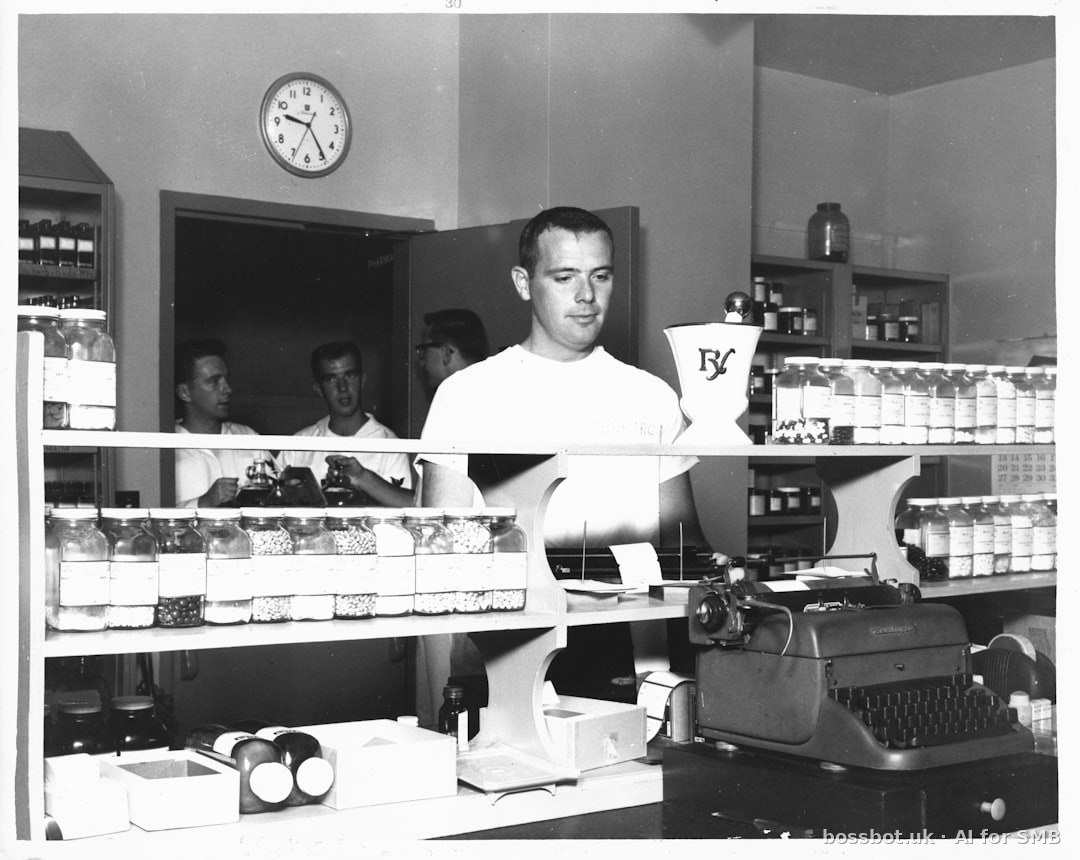
10 direct questions Nigerian community pharmacies need answered before running WhatsApp — grounded in PCN Act CAP P17, NAFDAC rules, NDPA 2023.
- Why a Q&A-with-regulators format matters more than a generic WhatsApp-pharmacy guide
- Q1-Q4: PCN questions — dispensing, pharmacist involvement, premises
- Q5-Q7: NAFDAC questions — drug advertising, controlled substances, adverse reactions
- Q8-Q10: NDPC/NDPA questions — patient consent, breach notification, retention
- What to do this week if you can't cleanly answer 3+ of these 10 questions
- Practical BSP + Meta template setup for a Nigerian community pharmacy
- When PCN, NAFDAC, and NDPC guidance overlap or conflict
- Rural and peri-urban Nigerian pharmacy considerations — connectivity, cost, referral
- Chronic-Care Dispensing, Refill Reminders, and Adherence Programme Coordination
- Home Delivery, Digital Pharmacy Platforms, and OTC vs POM Category Discipline
Why a Q&A-with-regulators format matters more than a generic WhatsApp-pharmacy guide
Community pharmacy in Nigeria operates under a stack of regulators that most 'digital transformation for SMBs' content ignores. A Lagos pharmacy owner doesn't need another article explaining WhatsApp Business API; they need direct answers to specific questions like 'can Salesbot approve my patient's diabetes-medication refill without me?' and 'is the medication reminder broadcast I sent last month a NAFDAC violation?'.
This walkthrough is structured as 10 Q&A grouped by the three regulators that actually apply:
Q1-Q4 → PCN (Pharmacists Council of Nigeria) — the professional body regulating pharmacy practice under PCN Act CAP P17 Laws of the Federation of Nigeria, which governs pharmacist licensing, dispensing responsibilities, and premises regulation. PCN is the regulator whose ruling determines whether a specific WhatsApp workflow is a professional-conduct violation.
Q5-Q7 → NAFDAC (National Agency for Food and Drug Administration and Control) — the drug regulator under NAFDAC Act CAP N1, particularly the Prescription Only Medicines (PoM) Advertising Regulations and Drug Product Advertising Regulations. NAFDAC decides whether a WhatsApp broadcast about a specific medication is a lawful health-education message or an illegal drug advert.
Q8-Q10 → NDPC (Nigeria Data Protection Commission) — enforcing the Nigeria Data Protection Act 2023 (NDPA). Patient health data is sensitive personal data under NDPA section 30, requiring stricter consent + security than ordinary customer data. NDPC decides whether your patient-conversation retention policy is compliant.
Any Nigerian community pharmacy actively using WhatsApp with patients should be able to answer these 10 questions before the regulator asks first. Each Q includes the specific regulatory citation + a concrete pharmacy example.
Q1-Q4: PCN questions — dispensing, pharmacist involvement, premises
Q1: Can a Nigerian community pharmacy dispense medication based on a prescription photo received via WhatsApp?
A: Yes, but only if the dispensing decision is made by a qualified pharmacist licensed by PCN. WhatsApp is a communication channel; dispensing is a professional act under PCN Act CAP P17. Specifically:
- Pharmacist reviews the prescription photo (verify prescriber signature, dose, quantity, refill status)
- Pharmacist checks against patient's known clinical history if available
- Pharmacist confirms with patient any ambiguity via WhatsApp voice call or callback
- The dispensing decision is documented in the pharmacy's dispensing register (physical or electronic — Nigerian pharmacies commonly use both)
- The patient collects in person OR receives via a verified courier arrangement (dispensing to unknown third parties is problematic)
What violates PCN: dispensing based on a WhatsApp photo without pharmacist review, or having non-pharmacist staff approve refills without pharmacist involvement. This is not automation-specific — it's about the professional act itself.
Q2: Can automation (Salesbot, WATI chatbot) approve prescription refills without a pharmacist?
A: No. Refill approval is a dispensing decision requiring pharmacist judgment under PCN Act. Automation can:
- Receive the refill request and confirm receipt to patient ('We've got your request — pharmacist will review within 4 hours during opening hours')
- Collect the metadata (patient name, medication, original prescribing doctor, refill count)
- Route to pharmacist for review + approval
- Send the pharmacist's approved response back to patient
What automation CANNOT do: independently decide 'yes refill is approved, come collect' without the pharmacist in the loop. Even if the medication is a maintenance drug the patient has taken for years, PCN considers each dispensing act a professional judgment.
Q3: Can a non-pharmacist counter assistant respond to patient WhatsApp messages about medication?
A: Yes for administrative queries (stock availability, hours, location, delivery arrangement); no for clinical queries (dosage adjustment, side effect discussion, drug interaction question). The dividing line is professional judgment vs administrative task.
- Counter assistant can say: 'Yes we have paracetamol in stock, ₦500 for 20 tablets, we close at 9pm today'
- Counter assistant should NOT say: 'You can take an extra tablet if the pain is still there' — that's dosage advice requiring pharmacist input
Automation flow should route clinical questions to the pharmacist automatically. Escalation triggers: keywords like 'side effect', 'reaction', 'not working', 'dose', 'interact', 'safe to take with'.
Q4: Does the pharmacy WhatsApp number need to be registered with PCN?
A: PCN does not currently maintain a WhatsApp-number registration requirement. However, the pharmacy premises license (Premises Registration Certificate under PCN Act) is what licenses the pharmacy operation. The WhatsApp communication is an extension of that operation. Practical implications:
- Use a business WhatsApp number, not personal (professional separation)
- Include the PCN premises registration number in your WhatsApp Business profile description ('PCN Registered Premises: PRC/00XXXX') — provides regulatory transparency
- If your pharmacy has multiple premises, use separate WhatsApp numbers per premises to keep documentation clean
- When PCN inspections happen (periodic + complaint-triggered), inspectors may review your patient communication practices — WhatsApp records can be requested
Defensive posture: assume your WhatsApp conversations are inspectable regulatory records. Keep them at that professional standard.
Q5-Q7: NAFDAC questions — drug advertising, controlled substances, adverse reactions
Q5: Can I broadcast a WhatsApp message announcing a discount on antimalarials or antihypertensives?
A: No. NAFDAC's Drug Product Advertising Regulations prohibit advertising Prescription Only Medicines (PoM) to the general public. Both antimalarials (many are POM including artemether-lumefantrine combinations) and antihypertensives (all POM) fall under this restriction.
What you CAN broadcast:
- General health education: 'Rainy season = higher malaria risk. Come in for screening or ask about prevention.'
- OTC (Over The Counter) product information: paracetamol, vitamins, mosquito repellents, first-aid supplies
- Public health alerts issued by NAFDAC or Federal Ministry of Health that pharmacies are encouraged to amplify
- Pharmacist consultation availability: 'Pharmacist available for blood pressure check — walk-in, no appointment needed'
What you CANNOT broadcast:
- 'Now available: Amlodipine 5mg at ₦2,500' — this is prescription drug advertising
- 'Special discount on ceftriaxone injection this week' — same issue
- 'Ask about our diabetes-medication packages' — implies PoM promotion
Penalty: NAFDAC drug-advertising violations carry fines ₦500,000-₦5,000,000+ per offense per NAFDAC enforcement pattern, plus potential PCN professional-conduct implications for the pharmacist responsible.
Q6: Can I use WhatsApp to remind a specific patient (not a broadcast) about their prescription medication refill?
A: Yes, provided you have documented consent from that patient to receive medication-related communication, and provided the message is to a specific patient with an existing dispensing relationship — not a marketing broadcast to a list. This is a critical distinction:
- Individual patient communication (with prior consent): a message to Mrs. Adaeze about her regular atenolol refill is patient-care communication, not drug advertising
- Broadcast marketing (even to opted-in list): a message to 200 patients about 'come get your monthly hypertension medication' becomes a POM promotion
The distinction matters because NAFDAC advertising rules apply to promotion aimed at the public; individual patient care communication is professional practice, not advertising.
Q7: What are the WhatsApp rules for controlled substances (Class A/B drugs, benzodiazepines, opioids)?
A: Extra strict. Controlled substances in Nigeria are regulated under NDLEA (National Drug Law Enforcement Agency) framework in addition to NAFDAC. For pharmacy WhatsApp:
- Never accept controlled-substance prescription orders via WhatsApp for remote dispensing — controlled substance dispensing requires in-person prescription verification + patient identity check + signed register entry
- Do not send information via WhatsApp that identifies specific controlled substances dispensed to specific patients — this becomes a record-keeping issue if intercepted
- Adverse reaction reports involving controlled substances should go through NDLEA/NAFDAC official channels, not WhatsApp initial-triage
- Refill requests for controlled substances via WhatsApp are permitted only for administrative scheduling (booking the in-person visit), not for the dispensing decision itself
If your pharmacy dispenses significant controlled substances, treat WhatsApp as an administrative/coordination tool only. Actual controlled-substance workflow remains in-person + physical prescription + NDLEA-compliant register.
Q8-Q10: NDPC/NDPA questions — patient consent, breach notification, retention
Q8: What consent do I need from a patient before adding them to WhatsApp patient-communication?
A: Explicit, documented consent that specifically covers health-related communication. Patient health data is sensitive personal data under NDPA 2023 section 30 — requiring higher standards than ordinary customer data.
Compliant consent capture pattern:
- First contact with patient (in-store, over phone, or new WhatsApp enquiry): explain that pharmacy uses WhatsApp for reminders + refill communication
- Request explicit consent: 'Do you agree to receive medication reminders and refill notifications via WhatsApp on this number? Reply YES to consent, NO to skip. You can opt out any time by replying STOP.'
- Store the consent record: date + WhatsApp number + purpose consented to + text of consent + response
- Separate consent required for different purposes: consent for refill reminders is different from consent for general health-education broadcasts, which is different from consent for OTC product promotions
What non-compliant looks like: adding a patient's number to broadcast list because they came in once and gave their number for a receipt. Not documented consent, wrong purpose, NDPA violation.
Q9: How long can I keep WhatsApp patient conversations, and what's the deletion obligation?
A: Depends on the purpose the data was collected for. NDPA storage limitation principle requires deletion when purpose is fulfilled, but overlapping regulations set floor retention:
| Data type | Retention floor | Reason |
|---|---|---|
| Dispensing records (patient, medication, date, quantity, pharmacist) | 6 years minimum | PCN pharmacy record-keeping standards + NAFDAC audit trail |
| Prescription photos received via WhatsApp | 6 years (attached to dispensing record) | Same as above |
| Consent records (opt-in confirmations) | While consent is active + 6 years after opt-out | For consent-evidence in NDPC audit |
| General WhatsApp conversation history (non-dispensing enquiries) | 12-24 months | For customer service continuity, not longer than needed |
| Marketing broadcast recipient lists | Deleted when patient opts out (with consent-evidence retention above) | Purpose limitation |
Practical implementation: WhatsApp itself has no automatic retention enforcement. Pharmacy needs a manual monthly review OR a BSP-side auto-deletion configuration. Dispensing records should be archived to secure storage (physical dispensing register, electronic pharmacy management system) separately from the WhatsApp conversation itself.
Q10: What must I do if there's a data breach involving patient WhatsApp conversations?
A: Report to NDPC within 72 hours of becoming aware of the breach, per NDPA 2023 section 40. Applies to breaches like: staff member's phone containing patient WhatsApp is lost or stolen, WhatsApp Business API BSP account is compromised, patient conversation is forwarded outside pharmacy without authorisation.
Breach notification requires:
- Notification to NDPC within 72 hours via the official NDPC portal
- Notification to affected patients ('data subjects') where the breach is likely to result in high risk to their rights and freedoms
- Documentation of breach circumstances, categories + approximate number of data subjects affected, likely consequences, mitigation measures taken
Penalty for failure to notify: NDPC can impose fines up to ₦10M for Data Controllers of Major Importance under NDPA section 48 for material breaches — plus reputational damage and potential PCN professional-conduct implications for the responsible pharmacist.
DCMI threshold reality: any Nigerian community pharmacy with 200+ active patients over a 6-month period likely qualifies as Data Controller of Major Importance under NDPC guidance. Most established community pharmacies exceed this threshold.
Practical breach-response infrastructure: before you have a breach, know which staff member has access to what WhatsApp data, know your BSP's incident-response contact, have the NDPC portal URL bookmarked, and have a draft breach-notification template ready. Retrofit-panicking during a breach window doesn't scale.
What to do this week if you can't cleanly answer 3+ of these 10 questions
The audit-first action (2-3 hours this week):
Go through Q1-Q10 above and mark each: Green (you can answer confidently with citation), Amber (you know roughly but haven't documented), Red (you don't know or the answer surprises you). Any Red or Amber is a compliance gap needing action.
Most common gaps discovered in Nigerian community pharmacy audits:
- Q2 gap — refill request workflow that lets counter assistant approve without pharmacist review. Fix: add explicit escalation trigger in WhatsApp flow, document pharmacist-review requirement in staff SOP.
- Q5 gap — broadcast messages that mention specific POM drugs. Fix: audit all past 12 months of broadcasts, identify POM-mentioning ones, delete + document + retrain staff on OTC-only rule.
- Q8 gap — patients added to broadcast list without documented consent. Fix: audit broadcast list, send re-consent message to all, purge non-responders.
- Q9 gap — no retention policy for WhatsApp conversations. Fix: draft simple retention policy (12-24 month general, 6-year dispensing records), implement monthly manual review OR configure BSP auto-deletion.
- Q10 gap — no breach-response plan. Fix: bookmark NDPC breach portal, name a designated breach-response person, draft template notification.
Escalate to a Nigerian data-protection solicitor if: you have had a past NDPC complaint, PCN professional-conduct concern, or NAFDAC advertising notice. Sector-specific legal advice is worth the ₦150K-₦500K consultation cost against the enforcement exposure.
Not compliance advice — this is a walkthrough: the Q&A above summarises publicly-available regulatory positions from PCN, NAFDAC, and NDPC as of 2026-08-11. Regulatory interpretation shifts. For your specific pharmacy operation, engage a Nigerian solicitor with health-sector experience — Pharmaceutical Society of Nigeria (PSN) can refer members to appropriate legal counsel.
Practical BSP + Meta template setup for a Nigerian community pharmacy
Direct answer: for a Nigerian community pharmacy with 100-400 active patients, WATI Growth ($49/mo, ~₦77,500) is the modal starting BSP — supports 5 users, native template builder, Nigeria phone-number provisioning, and integrates with Paystack for OTC payment collection. For pharmacies also serving Instagram/Facebook enquiries, respond.io Team ($79/mo, ~₦125,000) covers 10 users and multichannel. Meta template approval for pharmacy templates takes 3-7 business days per template with iteration; expect several rejection cycles on refill-reminder templates as Meta screens for compliance with health-content policies.
Meta template category selection for pharmacy templates:
| Template purpose | Category | Approval notes |
|---|---|---|
| Refill reminder (specific patient) | Utility | Passes if worded operationally; avoid drug-name in template placeholders |
| Pickup confirmation | Utility | Standard operational message, high approval rate |
| Appointment scheduling (pharmacist consultation) | Utility | Passes; frame as consultation not treatment |
| OTC availability broadcast | Marketing | Requires marketing category submission + opt-in list; avoid POM mentions |
| Public health alert (from NAFDAC / FMOH) | Utility | Passes when clearly attributed to source |
| Discount or promotional content | Marketing | Approved for OTC only; PoM promotion violates NAFDAC |
Common Meta rejection reasons for pharmacy templates and fixes:
- 'Contains health claims requiring pre-approval' — often triggered by specific medication names in template placeholders. Fix: use generic terms ('your prescribed medication') rather than embedding drug names in the template variable.
- 'Category mismatch' — refill reminders submitted as marketing get rejected. Fix: resubmit as utility with operational-only language.
- 'Promotional language in utility template' — words like 'special', 'limited', 'only today' push utility into marketing category. Fix: remove urgency language for utility templates.
Nigeria-specific BSP evaluation criteria beyond the pricing sticker:
- Naira billing — WATI accepts Paystack merchant billing in some contracts; respond.io and Twilio bill USD only, exposing pharmacy to 5-15% quarterly FX risk relative to naira operational costs.
- +234 number provisioning — some BSPs cannot directly provision Nigerian numbers and require migration of an existing verified WhatsApp Business number. Confirm before contracting.
- PCN premises association — the pharmacy's WhatsApp number should be tied to the specific PCN Premises Registration Certificate; multi-premises pharmacies benefit from one WhatsApp number per registered premises to keep regulatory documentation clean.
- BSP data residency — most BSPs host outside Nigeria (US or EU). This must be disclosed in the pharmacy's NDPA privacy notice as a cross-border transfer. Nigerian-hosted BSP options exist but are limited; the disclosure route is more practical.
Realistic month-1 rollout timeline for a mid Nigerian pharmacy:
Week 1: BSP contract signed, number provisioned, staff accounts created. Week 2: templates drafted (5-8 initial templates covering refill reminders, pickup confirmations, consultation scheduling, OTC availability, breach response). Week 3: templates submitted to Meta; iterate on rejections. Week 4: soft launch with 20-30% of patient volume; monitor conversation logs. Weeks 5-8: full rollout, retention policy activated, monthly review routine established.
When PCN, NAFDAC, and NDPC guidance overlap or conflict
Direct answer: three real-world overlap scenarios recur in Nigerian pharmacy practice — NAFDAC recall notification that reveals patient dispensing history, NDPA consent for automated marketing to opted-in patients that touches POM categories, and controlled-substance workflow satisfying both NDLEA record-keeping and NDPA data-minimisation. Each has a defensible resolution; documenting the reasoning matters more than the specific choice.
Scenario 1: NAFDAC issues a drug recall — how do you notify affected patients without violating NDPA marketing consent?
NAFDAC drug recalls are public health matters. Pharmacies have a professional obligation under PCN to warn patients who received the recalled batch. This is not marketing communication under NDPA — it is patient safety communication necessary for the pharmacy's professional duty of care. Documented pattern:
- Identify affected patients from dispensing register (batch number match)
- Send a utility template message referencing NAFDAC recall notice number with instructions for return/exchange
- Log the recall notification in the patient's dispensing record with date, batch, and NAFDAC reference
- Do not require marketing-consent flag for this message — it is safety-critical operational content, not promotion
The NDPA lawful basis here is the pharmacy's legitimate interest in patient safety, combined with the professional duty imposed by PCN. NDPC guidance acknowledges safety-critical communications as a legitimate basis distinct from marketing consent.
Scenario 2: A patient opted in for marketing broadcasts, but the broadcast you want to send touches on a POM category — legal or not?
Even with patient marketing consent, NAFDAC's prohibition on POM advertising to the public is regulator-level and cannot be waived by individual patient consent. A patient cannot consent themselves out of a NAFDAC public-health protection. Practical rule: the marketing consent flag permits OTC broadcasts and general health education; it does NOT unlock POM broadcast content. The two regulators are additive, not substitutive.
Scenario 3: Controlled-substance dispensing — NDLEA requires detailed record retention indefinitely, but NDPA data-minimisation says delete when purpose fulfilled. Which wins?
NDLEA record-keeping obligations for controlled substances (Schedule 1-4 drugs) run for a minimum of 10 years for professional pharmacy records under the Nigerian Drug Law Enforcement Agency Act and the NDLEA (Establishment) Act regulations. NDPA data-minimisation is subject to statutory overrides — where another law requires longer retention, that longer period governs. So the NDLEA retention obligation controls: pharmacy retains controlled-substance dispensing records for 10 years minimum, storing them outside the WhatsApp conversation itself (in a secure pharmacy management system or physical controlled-drug register).
The general rule when NDPA appears to conflict with a sector regulator. NDPA section 26 recognises statutory overrides — data protection obligations yield where another Nigerian law imposes specific processing or retention requirements on the sector. Pharmacy-specific NDPC guidance (2024) explicitly acknowledges PCN, NAFDAC, and NDLEA obligations as valid overrides. When in doubt, document the reasoning in the pharmacy's data-processing register — NDPC audits look at the documented reasoning as much as the choice made.
Rural and peri-urban Nigerian pharmacy considerations — connectivity, cost, referral
Direct answer: pharmacies outside Lagos, Abuja, Port Harcourt, Ibadan, and Kano metropolitan areas face materially different WhatsApp operational economics — patchy 3G/4G connectivity affects real-time template delivery, Meta conversation-fee pass-through is a larger share of thinner margins, and the PSN state-branch referral network becomes more important for hard regulatory questions than direct-to-NDPC or direct-to-NAFDAC engagement. The workflow patterns from metropolitan pharmacies transfer, but the resourcing calibration differs.
Connectivity reality across Nigerian pharmacy locations. GSMA and NCC coverage data show that 4G reaches most state capitals reliably but degrades in secondary and tertiary town centres, particularly in North-East and North-West states. Practical implication for pharmacy WhatsApp: template messages sent at 8am may not deliver to patients on 3G edge coverage until 10am when connectivity strengthens. Refill reminders should build in a 4-6 hour delivery-window buffer relative to the intended reminder time, and template wording should not create false urgency ('reply within the next 30 minutes') that misfires when delivery lags.
Cost calculus for smaller-market pharmacies. A rural or peri-urban pharmacy with 40-80 active patients rarely justifies the ₦77,500/mo WATI Growth tier — the operational leverage isn't there. Compliant alternatives:
- WhatsApp Business App (free) for pharmacies under 50 active patients, with the pharmacist personally handling the shared inbox. Consent capture handled manually (WhatsApp quick-reply for standard consent script), documented in the paper dispensing register or a simple spreadsheet.
- AiSensy (India-native BSP with Nigeria adoption, ~$25-40/mo entry) — cheaper than WATI, adequate for straightforward refill-reminder use case, less mature Nigerian support presence.
- Local BSP options — a handful of Nigerian-hosted or Africa-focused BSPs have emerged (Africa's Talking, others) that price closer to naira operational reality. Fewer integration options with Paystack + accounting software; adequate for basic WhatsApp operations.
PSN state-branch referral network for hard cases. Community pharmacists outside metropolitan areas typically have limited direct-to-regulator access when a specific NAFDAC or PCN interpretation question arises. The Pharmaceutical Society of Nigeria state branches (PSN Lagos, PSN Rivers, PSN Kano, PSN Cross River, etc.) provide member-referral to appropriate regulatory contacts and to health-sector solicitors familiar with local regulatory culture. Membership dues typically ₦20,000-50,000 annually — materially cheaper than a first-time direct engagement with an unfamiliar specialist and often more effective for interpretation-level questions.
Language and dispensing-instruction adaptation. Patient bases in Northern states may prefer Hausa communication; South-South and South-East may prefer Igbo or local languages for dispensing instructions. Compliant pattern: the formal dispensing record (labels, receipts, register entries) stays in English per PCN professional-record standards, while the patient-facing WhatsApp explanation of how to take the medication uses the language the patient understands best. Pharmacist-authored language variants beat auto-translated ones — Meta template translation for pharmacy content is notably weak on medical terminology, and mis-translated dosage instructions are a patient-safety risk beyond the marketing-message miscue class.
Referral to metropolitan-tier pharmacy for complex cases. Some clinical scenarios exceed what a rural or peri-urban pharmacy can safely handle over WhatsApp — complex polypharmacy for elderly patients, controlled-substance escalations, adverse drug reaction reports. The compliant response is referral to a nearby metropolitan-tier pharmacy or hospital pharmacy with the resources to handle the case, not attempting to over-scope the WhatsApp channel. Templated referral language should be part of the standard template library alongside the operational templates.
Chronic-Care Dispensing, Refill Reminders, and Adherence Programme Coordination
A meaningful portion of Nigerian community-pharmacy revenue comes from chronic-care medication dispensing — hypertension, diabetes, HIV, TB, epilepsy, asthma, mental health. Refill discipline is where WhatsApp adds direct clinical and commercial value.
Nigerian chronic-care segments:
- Hypertension — high adult prevalence; typical medications ACE inhibitors (Lisinopril, Ramipril), ARBs (Losartan, Telmisartan, Valsartan), calcium channel blockers (Amlodipine, Nifedipine), thiazide diuretics (HCTZ, Indapamide), beta-blockers (Atenolol, Bisoprolol). Monthly to quarterly refill cycle.
- Diabetes — Metformin baseline; sulfonylureas (Glimepiride, Gliclazide); SGLT2 inhibitors (Dapagliflozin, Empagliflozin); GLP-1 receptor agonists (Semaglutide Ozempic); insulin (basal + bolus). Monthly refill cycle typical.
- HIV — antiretroviral therapy (ART); free-at-point-of-care via federal programme for eligible patients, private-sector pharmacy dispensing for out-of-programme patients. Adherence critical for viral suppression.
- TB — DOTS (Directly Observed Treatment Short-course) national programme; pharmacy engagement for adherence support.
- Epilepsy — antiepileptic drugs (AEDs) — Carbamazepine, Valproate, Levetiracetam, Phenytoin; monthly refill.
- Asthma / COPD — inhaler devices (Ventolin, Seretide, Symbicort, Spiriva, steroid preventers); nebuliser solutions.
- Mental health — antidepressants, antipsychotics, mood stabilisers; adherence particularly sensitive.
WhatsApp refill-reminder workflow:
- Refill-due calculation — from last-dispensed date + days-supply calculation; reminder sent 5-7 days before expected run-out.
- Reminder template — 'Reminder: your [medication name] refill is due by [date]. Reply YES to prepare + we'll notify when ready for pickup / delivery.' (Meta utility template category — low per-message cost).
- Delivery vs pickup — many patients prefer delivery for chronic-refill; Kwik / GIGL / local rider coordination via WhatsApp with delivery-fee transparency.
- Payment coordination — Paystack link for card-payment refill; direct bank transfer for larger orders; HMO-covered patients coordinated via HMO authorisation.
- Missed-refill escalation — patient with no refill activity 7 days past due-date receives escalation reminder; 14 days past = human-pharmacist follow-up call (not chatbot) to check adherence barriers.
Adherence-programme partnership:
- HIV / TB national programme coordination — participating pharmacies coordinate with programme case-managers via WhatsApp for high-risk-patient adherence support (with patient consent).
- Chronic-disease management partnership with GP — some pharmacies operate closer to GP-partnered chronic-care model with shared patient-management thread (patient-consented).
- NDPA discipline — chronic-medication data is Section 30 sensitive personal data; explicit consent for WhatsApp refill-reminder and refill-history retention; opt-out honoured.
Counselling touch-points:
- New-prescription counselling — first dispense of new medication requires pharmacist counselling on dose, timing, food-interaction, side-effects, contact-if-concerned; can happen in-store, via WhatsApp voice call, or via structured text-message follow-up.
- Side-effect reporting — patient-reported adverse reaction routed to pharmacist review + NAFDAC MedSafety reporting where warranted; not chatbot triage.
Home Delivery, Digital Pharmacy Platforms, and OTC vs POM Category Discipline
Home-delivery pharmacy and digital-first pharmacy platforms have grown materially in Nigeria over the past decade, particularly post-pandemic. The WhatsApp layer sits at the intersection of walk-in community pharmacy and app-first digital pharmacy.
Nigerian digital-pharmacy landscape:
- HealthPlus, MedPlus, Alpha Pharmacy, Emzor — traditional pharmacy chains with growing digital-and-delivery capability.
- Sundry Foods, Mopheth Group, Netpharmacy — mixed-format community + digital operators.
- Reliance Health / Reliance Family Care — HMO-adjacent care platform with pharmacy delivery integration.
- DrugStoc, Lifestores Healthcare — B2B pharmacy supply chain with retail-adjacent consumer-facing product.
- Reddington / St Nicholas / Lagoons hospital pharmacies — hospital-attached retail pharmacy with home-delivery option for admitted-then-discharged patients.
OTC vs POM (Prescription-Only Medicine) dispensing discipline:
- OTC (Over-the-Counter) medicines — paracetamol, ibuprofen, cough suppressants, antacids, oral rehydration solution, first-aid supplies. Directly dispensed without prescription. WhatsApp order + delivery straightforward.
- POM (Prescription-Only Medicines) — antibiotics, antihypertensives, antidiabetics, antipsychotics, controlled analgesics. Require valid prescription from MDCN-registered doctor before dispensing. WhatsApp workflow: prescription-photo shared (with patient consent + NDPA framing); pharmacist verifies + dispenses.
- Controlled substances (opioids, benzodiazepines, some sleep medications) — additional register documentation + limited-quantity dispensing per PCN and NAFDAC rules; WhatsApp cannot replace the physical prescription-and-documentation trail.
Prescription-photo verification workflow:
- Patient sends prescription photo via WhatsApp with prescriber name + patient name legible.
- Pharmacist verifies prescriber identity (MDCN-registered) + prescription validity (date, dose, quantity, refill count).
- Photo storage in encrypted cloud with retention per NAFDAC + NDPA discipline; not retained on device long-term.
- Dispensing decision — if prescription valid, dispense per prescription; if invalid or ambiguous, contact prescribing doctor for clarification (not chatbot); if suspected fraudulent, decline + document + report where warranted.
Home-delivery workflow:
- Delivery-fee transparency — quoted upfront on order confirmation.
- Cold-chain medications — insulin, some biologics, some vaccines require temperature-controlled delivery; specialist cold-chain courier or same-day pickup recommended.
- Recipient-verification for POM — POM delivery to correct patient; ID check by delivery driver for controlled substances; POD signature captured.
- Delivery-failure recovery — no-answer / wrong-address handled with return-to-pharmacy + re-attempt coordination via WhatsApp.
Cross-border pharmacy considerations:
- Diaspora returning-home patient — brings own foreign-prescription medication for continuity; may need Nigerian equivalent + prescription conversion by Nigerian MDCN-registered doctor.
- Import via ports — NAFDAC-registered import channels only; parallel-import via informal channels carries counterfeit-risk that pharmacy dispensing discipline must screen against.
- Anti-counterfeit discipline — visual product-authentication + NAFDAC-verified supplier chain + MAS (Mobile Authentication Service) scratch-and-verify SMS code check for verified brands.
Sources
Data + numbers referenced in this article are sourced from these public documents:
- PSN — Pharmaceutical Society of Nigeria
- WHO — Adherence to Long-term Therapies: Evidence for Action (2003)
- Meta WhatsApp Business Platform pricing (Nigeria conversation rates)
- WATI pricing (WhatsApp BSP verified 2026-08-11)
- respond.io pricing (multichannel BSP)
- AiSensy pricing (India-native BSP with Nigeria adoption)
- Statista — Nigeria WhatsApp user base
Frequently Asked Questions
BossBot for Pharmacies
Product page with honest feature list, "not for you if" filter, and live demo for this vertical.
See /for/pharmacy →The 10-question audit is the compliance floor for any Nigerian pharmacy on WhatsApp
This Q&A walkthrough is one of a series covering vertical + market regulatory compliance for WhatsApp automation. If your Nigerian pharmacy also handles milestone construction billing, our Nigerian construction Paystack teardown applies the same regulatory-first framework.
Read the Nigerian accountant WhatsApp teardownNot ready to sign up yet? Try the free demo →